
If your lawn is looking thin, patchy, or worn after a long summer, fall is one of the best times to give it a fresh start. Overseeding introduces new grass seed into an existing lawn, helping fill bare areas, improve turf density, and create a healthier, greener lawn.
For Connecticut homeowners in particular, learning how to overseed a lawn in fall can make a noticeable difference in how your property looks both now and next spring. Cooler temperatures, warm soil, and typically more consistent moisture create favorable conditions for many of the cool-season grasses commonly found throughout the Northeast.
Here’s how to overseed your lawn in the fall and give new grass the best opportunity to become established before winter.
What Is Lawn Overseeding?
Overseeding is the process of spreading new grass seed over an existing lawn without completely removing the current turf.
Rather than starting your lawn over, overseeding helps improve what you already have. It can be particularly helpful for lawns experiencing:
- Thin or sparse grass
- Bare patches
- Summer heat or drought damage
- Heavy foot traffic
- Poor turf density
- Aging grass varieties
- Damage from insects or disease
Overseeding can also introduce newer or more appropriate grass varieties that make your lawn thicker and more resilient.
Why Is Fall a Good Time to Overseed Your Lawn?
If you’re wondering how to overseed in the fall successfully, timing is an important part of the process.
Most Connecticut lawns contain cool-season grasses such as Kentucky bluegrass, perennial ryegrass, fine fescue, and tall fescue. These grasses thrive when temperatures begin cooling down in late summer and fall.
Fall overseeding offers several advantages:
- Warm soil: Although air temperatures are cooling, soil can remain warm enough to encourage seed germination.
- Cooler temperatures: Young grass isn’t subjected to the intense heat and stress common during the middle of summer.
- Reduced weed competition: Many common annual lawn weeds begin slowing down as fall approaches.
- More favorable moisture conditions: Cooler weather can help the soil retain moisture longer between watering.
- Time to establish before winter: When overseeding is completed early enough, new grass has an opportunity to develop roots before winter dormancy.
The result can be a denser lawn going into winter and stronger growth when temperatures warm again in spring.
When Should You Overseed a Lawn in Fall in Connecticut?
For many Connecticut lawns, the ideal fall lawn improvement window begins around late August and continues into early fall.
However, there’s no single date that’s right for every property or every year. Weather conditions, grass variety, soil temperature, rainfall, and your location within Connecticut can all influence the best time to seed.
The key is to overseed early enough for the new grass to germinate and establish itself before freezing temperatures arrive.
Waiting until late fall can reduce your chances of success because seedlings may not have enough time to mature before winter.
How to Overseed Your Lawn in the Fall
Knowing how to overseed grass in the fall involves more than simply throwing grass seed over your yard. Proper preparation and seed-to-soil contact can dramatically affect your results.
1. Evaluate Your Existing Lawn
Start by determining why your lawn has become thin.
Look for issues such as:
- Compacted soil
- Poor drainage
- Excessive shade
- Heavy foot traffic
- Insect damage
- Lawn disease
- Poor soil conditions
- Improper watering
- Thick thatch
If an underlying problem isn’t addressed, adding more seed may only provide temporary improvement.
For severely damaged lawns, overseeding alone may not be enough. A more comprehensive lawn repair or renovation may be necessary.
2. Mow the Existing Grass
Before overseeding, mow your lawn slightly shorter than usual.
Shorter existing grass allows more sunlight to reach the soil and makes it easier for newly spread seed to reach the ground rather than getting caught in taller grass.
Remove excessive grass clippings, leaves, sticks, and other debris before moving on.
3. Aerate the Lawn
If you want to know how to overseed your lawn in the fall for better results, don’t overlook aeration.
Core aeration removes small plugs of soil throughout the lawn. This helps relieve soil compaction while improving the movement of water, nutrients, and oxygen into the root zone.
Aeration is particularly beneficial before overseeding because it also creates additional opportunities for grass seed to make direct contact with the soil.
That’s why lawn aeration and overseeding are frequently performed together.
4. Choose the Right Grass Seed
Not every grass seed is appropriate for every Connecticut lawn.
The right seed depends on several factors, including:
- Sunlight and shade
- Soil conditions
- Existing grass varieties
- Foot traffic
- Drainage
- Desired appearance
- Maintenance requirements
Common cool-season grasses used throughout Connecticut and the Northeast include Kentucky bluegrass, perennial ryegrass, fine fescue, and tall fescue.
Using an appropriate seed or seed blend can help produce a lawn that’s better suited to the conditions on your property.
5. Spread the Seed Evenly
Apply grass seed according to the recommended overseeding rate for the seed you’ve selected.
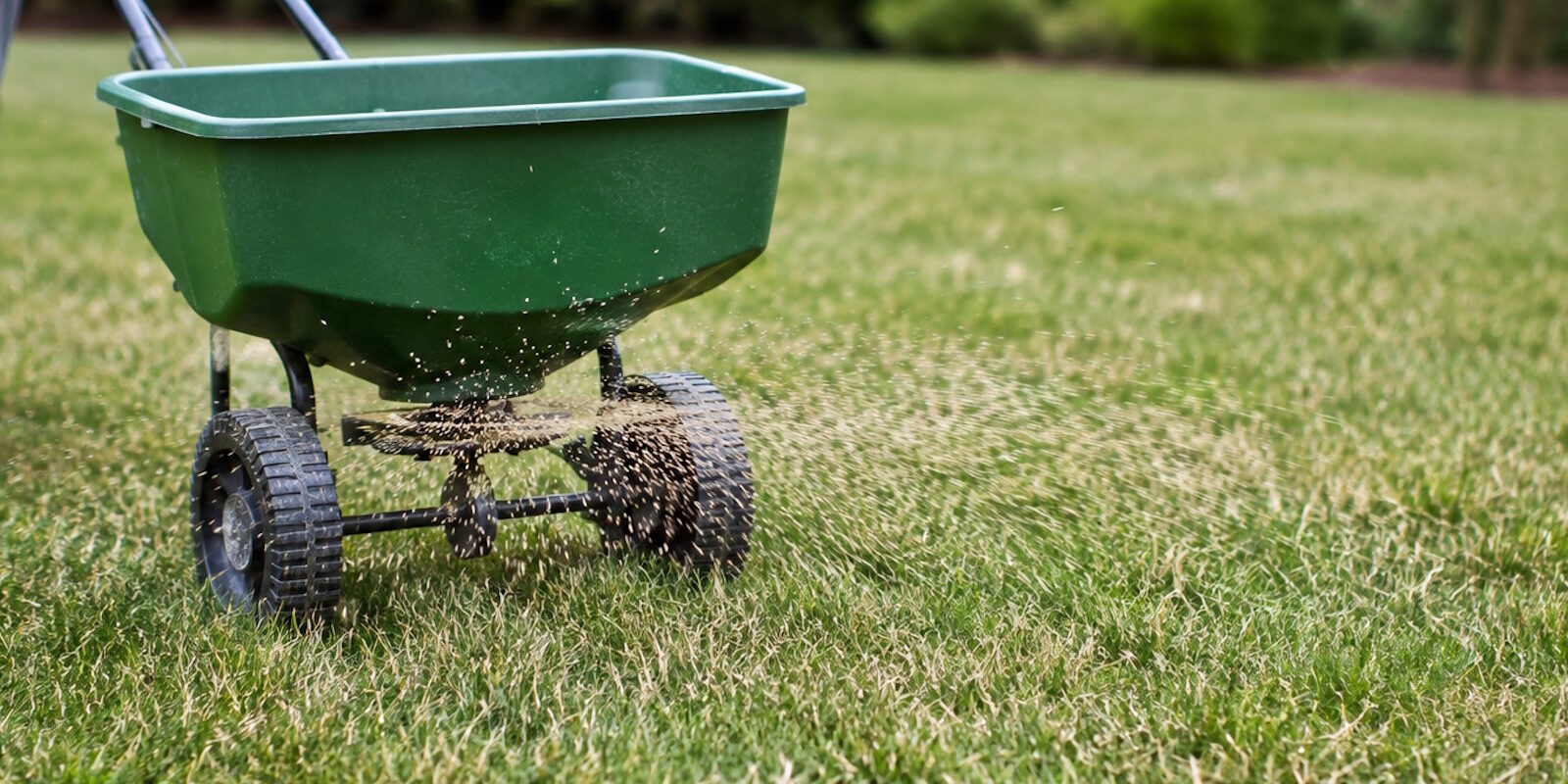
For larger lawns, a broadcast or drop spreader can help provide more consistent coverage.
Pay extra attention to thin and bare areas, but avoid assuming that more seed is always better. Excessive seeding can create competition among seedlings for water, nutrients, and growing space.
6. Improve Seed-to-Soil Contact
One of the most important parts of learning how to overseed lawn in fall is understanding that grass seed needs good contact with the soil.
Seed sitting on top of thick grass, leaves, or thatch is much less likely to establish successfully.
Aeration, dethatching when necessary, proper mowing, and other lawn preparation techniques can all help improve seed-to-soil contact.
7. Water the Newly Seeded Lawn
New grass seed needs consistent moisture to germinate.
Immediately after overseeding, begin watering according to the needs of the grass variety and current weather conditions. The goal during germination is generally to keep the upper portion of the soil consistently moist without creating puddles or washing seed away.
This may require more frequent, lighter watering at first.
As seedlings become established, watering can gradually transition toward deeper, less frequent irrigation that encourages stronger root development.
8. Limit Traffic on the Lawn
Give your new grass time to establish.
Heavy foot traffic from people, children, pets, and lawn equipment can damage young seedlings or disturb seed before it germinates.
Whenever possible, minimize traffic across newly overseeded areas until the grass has become established.
9. Wait Before Mowing New Grass
Don’t rush the first mowing.
Allow the new grass to reach an appropriate mowing height before cutting it for the first time. When you do mow, make sure your mower blade is sharp and avoid removing too much of the grass blade at once.
Gentle mowing practices help protect young plants while encouraging the lawn to thicken.
Should You Aerate Before Overseeding in Fall?
In many cases, yes.
For Connecticut lawns with compacted soil, aerating before overseeding can significantly improve growing conditions.
Aeration helps:
- Reduce soil compaction
- Improve water penetration
- Increase oxygen availability around roots
- Improve nutrient absorption
- Create better seed-to-soil contact
- Encourage stronger root development
Combining fall aeration and overseeding can be especially useful for lawns that endured heavy traffic, heat, or dry conditions throughout the summer.
Can You Overseed Without Aerating?
Yes, but the results depend heavily on the condition of your lawn.
If the soil is loose and healthy and there is already plenty of exposed soil, overseeding without aeration may work.
However, lawns with compacted soil or heavy thatch may benefit significantly from additional preparation. If most of the grass seed simply rests on top of existing turf and debris, germination can suffer.
Overseeding vs. Hydroseeding: What’s the Difference?
Traditional overseeding typically involves spreading dry grass seed over an existing lawn. Hydroseeding uses a specialized mixture of grass seed, mulch, fertilizer, water, and other materials that is sprayed onto prepared areas.
Both methods can play a role in lawn improvement.
Traditional overseeding can be effective for improving turf density and addressing minor thinning. Hydroseeding may be a better option when repairing larger damaged areas, renovating a struggling lawn, or establishing substantial areas of new grass.
At Girgenti Landscaping & Hydroseeding, we work with homeowners to evaluate the condition of their lawns and determine the most appropriate approach rather than applying the same solution to every property.
Common Fall Overseeding Mistakes to Avoid
Even if you know how to overseed in fall, a few common mistakes can limit your results.
Overseeding Too Late
New grass needs time to germinate and establish before winter. Waiting until temperatures become too cold can leave young seedlings vulnerable.
Choosing the Wrong Seed
Grass should be selected for your property’s specific sunlight, soil, moisture, and traffic conditions.
Skipping Lawn Preparation
Throwing seed directly onto a thick lawn isn’t necessarily enough. Good seed-to-soil contact is essential.
Letting the Seed Dry Out
Inconsistent watering during germination can dramatically reduce your results.
Overwatering
More isn’t always better. Excessive watering can create puddles, encourage disease, or wash seed away.
Ignoring the Reason Your Lawn Is Thin
If drainage, soil compaction, shade, insects, disease, or another underlying problem caused your lawn to decline, overseeding without addressing the cause may lead to the same problem again.
How Long Does Fall Overseeding Take to Grow?
Germination time depends on the grass variety, soil conditions, moisture, temperature, and weather.
Some grass varieties germinate relatively quickly, while others require considerably more time. Even after germination, young grass needs additional time to develop a strong root system.
That’s another reason why timing matters when determining how to overseed your lawn in the fall. Starting early enough gives new grass more time to mature before winter.
Is Fall Overseeding Worth It?
For many Connecticut lawns, absolutely.
A properly overseeded lawn can help:
- Fill thin and bare areas
- Increase turf density
- Improve lawn color
- Establish newer grass varieties
- Reduce opportunities for weeds to take over
- Repair summer damage
- Improve overall curb appeal
- Create a stronger lawn for the following spring
When combined with aeration and proper lawn care, overseeding can be one of the most effective ways to rejuvenate an existing lawn without completely starting over.
Professional Fall Aeration & Overseeding in Connecticut
Learning how to overseed a lawn in fall is relatively straightforward, but achieving consistent results requires proper timing, preparation, seed selection, application, and aftercare.
Girgenti Landscaping & Hydroseeding provides professional lawn aeration, overseeding, hydroseeding, lawn repair, and lawn installation services throughout Connecticut.
Every lawn is different. Our team can evaluate your existing turf and soil conditions, identify potential problems, and recommend the right approach for creating a thicker, healthier lawn.
Whether your property needs simple fall overseeding, aeration and overseeding, hydroseeding, or a more extensive lawn renovation, Girgenti Landscaping & Hydroseeding can help.
Ready to improve your lawn this fall? Contact Girgenti Landscaping & Hydroseeding today to request a free estimate.
Frequently Asked Questions About Overseeding a Lawn in Fall
What is the best month to overseed a lawn in Connecticut?
Late summer into early fall is typically an excellent time to overseed cool-season lawns in Connecticut. The exact timing depends on weather, grass variety, and local conditions, but you want to allow enough time for grass to germinate and become established before freezing weather.
Should I aerate before overseeding my lawn?
Aeration is often recommended before overseeding, particularly when soil is compacted. Core aeration improves seed-to-soil contact while allowing water, nutrients, and oxygen to reach the root zone more effectively.
Can I just throw grass seed over my existing lawn?
You can spread seed over existing grass, but germination is usually more successful when the lawn is properly prepared. Seed needs good contact with soil and consistent moisture to establish.
Should I fertilize when overseeding in the fall?
Fertilization may help support new grass growth, but the appropriate fertilizer depends on your soil and lawn conditions. A soil test can help determine which nutrients your lawn actually needs.
Is September too late to overseed?
Not necessarily. September can provide excellent growing conditions for cool-season grasses in Connecticut. However, timing becomes increasingly important as fall progresses because seedlings need enough time to establish before freezing temperatures arrive.
Is it better to overseed in spring or fall?
For many cool-season lawns in Connecticut and the Northeast, fall is generally the preferred time. Warm soil, cooler air temperatures, and reduced competition from many annual weeds can create favorable conditions for new grass establishment.